Why Play Is the Missing Piece of the Christmas Puzzle
Updated: Dec 7, 2025
For all our grown-up seriousness, there’s something heartening about how easily that spark of play comes back when Christmas gives us the rare excuse to slow down and enjoy it. After spending all year managing calendars, budgets, and transport, your day can brighten almost instantly the moment a trivia card or tiny puzzle appears on the table.
And maybe it’s not just the play itself — maybe it’s the way it brings a little joy to the people around us. As adults, so much of Christmas becomes about creating moments for others, and there’s a quiet pleasure in watching a table light up over something simple and shared. That shared pause — that light, unexpected lift — is part of what makes Christmas feel special.
Why Play Feels Different as an Adult (and Why Shared Moments Matter)

When we were kids, play was automatic — it happened somewhere between being told to put our shoes on and take them off again. As adults, it too often becomes oddly rare. Life fills itself with school runs, emails, and the ongoing mystery of “Who moved my tape measure this time?”, so by December, play feels less like a pastime and more like a welcome surprise. That’s why Christmas games land differently now: for a brief moment, we get to sit with people we actually like (or at least tolerate kindly), switch off the outside world, and enjoy something simple without anyone checking their phone.
There’s also the joy of shared silliness — something British adults are chronically deprived of outside weddings and assembling flat-pack furniture. Give a room of sensible grown-ups a daft prompt or tiny challenge, and suddenly everyone’s laughing harder than the moment strictly warrants. Those little bursts of laughter feel earned after a year of being respectable and pretending to understand the boiler. That’s the quiet power of play at Christmas: it gives the everyone the same gentle reason to lean in, in a way that keeps the room warm long after the gravy has gone cold.
The Christmas Dinner Problem (And How Games Quietly Fix It)
Christmas dinner is wonderful, but let’s be honest, it can also be a bit of a logistical tightrope. There’s the pre-meal small talk, the main course silence while everyone concentrates on potatoes, and then the slow drift into that post-turkey lull where half the table reaches for their phones and the other half debates whether it’s socially acceptable to nap.

And then there’s the food, there always seems to be far more of it than any sensible person planned. Christmas is one of the few days of the year where eating becomes a full-time hobby, and we embrace it proudly. But most of us would enjoy it even more if we paced ourselves a bit. Most Christmas hosts just want everyone to feel warm and connected — but they’re already spinning enough plates to qualify for a circus.
Building games into your day is a wonderful way of smoothing over all of that. Spreading out the day with moments of play between courses lets everything settle and turns the meal into a relaxed rhythm rather than a sprint — for the host and the guests. It stretches out the day, keeps the atmosphere buoyant, and turns the whole meal into something that feels less like a performance and more like a shared experience — unhurried, warm, and genuinely enjoyable. They also give the shy guests something to do, save us all from the moment someone brings up the nation’s energy prices, and give the host a chance to take a breather and join in the fun while the next course is in the oven.
What Kind of Games Work Best at Christmas? (Hint: Collaboration Beats Chaos)
Competitive games have their charm, but Christmas isn’t always the best setting for unleashing everyone’s inner tactician. Once the table is full of roast potatoes and family dynamics, a fierce “winner takes all” showdown can tip the mood from festive to frosty rather quickly. Collaborative or gently guided games, on the other hand, tend to bring out the best in everyone. When you’re working together — solving a clue, sharing a prompt, uncovering a tiny mystery — the energy becomes shared rather than split.
That’s why the sweetest spot at Christmas is often found in games that encourage teamwork, light laughter, or a touch of story. Nothing too serious, nothing that requires acting talent (mercifully), just enough structure to draw everyone in without anyone feeling put on the spot. A small puzzle before dessert or a quick round between courses — these are the moments that lift the room. The best Christmas games aren’t the ones that crown a champion; they’re the ones that leave everyone feeling part of something shared.
One Last Thought…
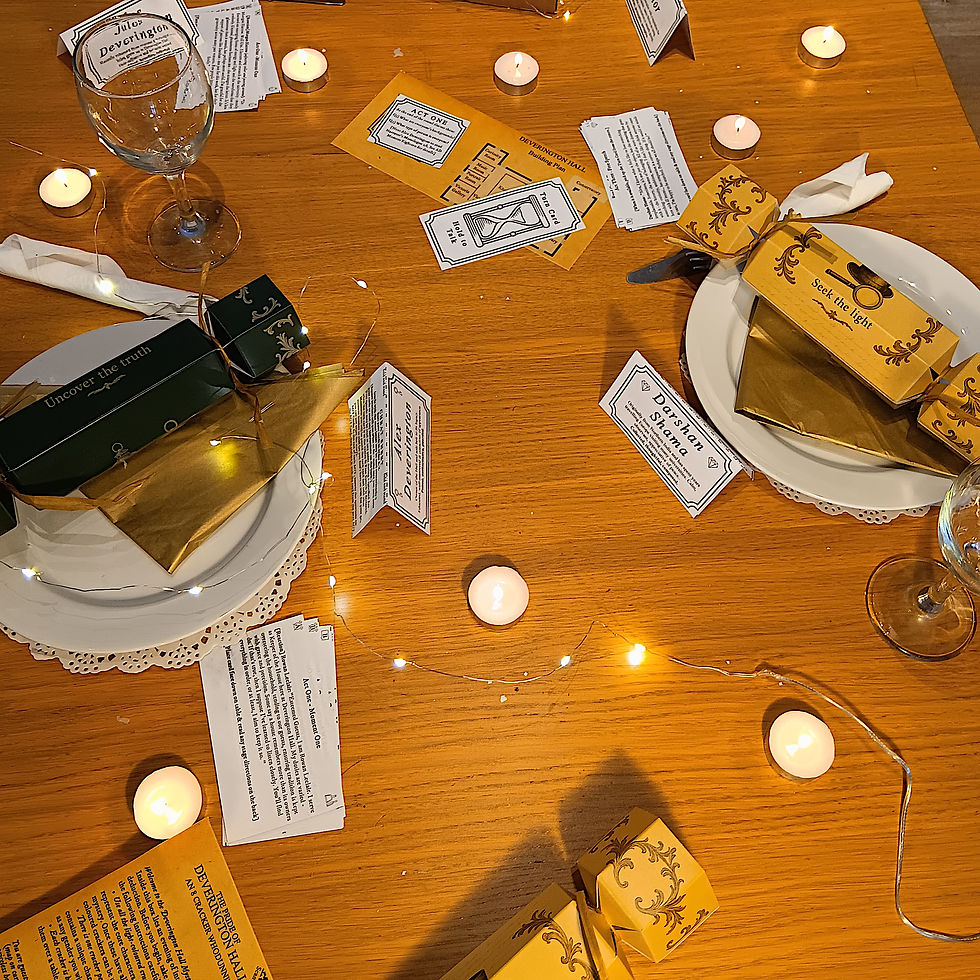
If you’ve got a go-to collaborative board game or a family tradition that gets everyone joining in, that’s often all you need. And if you’d rather not add “Games Master” to the host’s already ambitious job description, our party game-based and mystery crackers do most of the heavy lifting available through Amazon & Etsy. Everything’s there, ready to go — all you need is a few minutes to get your bearings and then let the fun unfold around the table, and you can always pass that job on to someone else!
Christmas doesn’t need grand gestures to feel magical. Often, it’s the small shared moments — the laughter, the leaning in, the tiny spark of play — that make the day linger in our memories long after the decorations come down. A little structure, a little silliness, and a little breathing space can turn a good Christmas into a gorgeous one. And however you choose to do it, everyone deserves a Christmas that feels warm, welcoming, and wonderfully human.



Comments